58 - Mental health issues during COVID-19: ADHD, OCD, PTSD, Depression, Eating Disorders, Substance Use, Family Issues

Feeling like your mental health is suffering during COVID-19? Finding that your attention is worse, you’ve started restricting your eating again or are having more compulsions? Then this episode is for you.

We chat about first steps to getting back on track when symptoms flare up during COVID including: ADHD, OCD, depression, eating disorders and PTSD/trauma. We also brainstorm ways of dealing with family conflict, drug and alcohol use, and parental guilt.

To wrap things up, we finish with what we’ll miss about lockdown and when we knew we’d been in lockdown a little too long.

Resources mentioned in the show:

57 - COVID-19 anxiety with Dr Sherman Lee

57 - We’re all worried about COVID-19, but how much worry is unhelpful?

Dr Lee and Lucky

Dr Lee and Lucky

We have a lively chat with Dr Sherman Lee, an Associate Professor researching COVID-19/Corona virus anxiety at Christopher Newport University in the United States. Sherman tells us about two scales he’s developed measuring 1) Corona anxiety and 2) obsessive thoughts about COVID-19 and grilling us on our responses. We chat through how these scales are helpful in identifying who has significant or extreme COVID-19 related anxiety and what problematic thoughts someone might be having. Along the way we draw on how Sherman got into this research, the role of spirituality in mental health and what COVID-19 anxiety can look like day to day. To wrap up we talk about some of the oddities of lock down in things we came across.

Dr Sherman Lee’s links:

Sherman can be contacted at: sherman.lee@cnu if you have any questions about the topic or using the measures for screening.

Papers:

Lee, S. A. (in press). Coronavirus Anxiety Scale: A brief mental health screener for COVID-19 related anxiety. Death Studies. doi: 10.1080/07481187.2020.1748481

Lee, S. A., Jobe, M. C., & Mathis, A. A. (2020). Mental health characteristics associated with dysfunctional coronavirus anxiety. Psychological Medicinehttps://doi.org/10.1017/S003329172000121X

Lee, S. A. (2020). How much “Thinking” about COVID-19 is clinically dysfunctional? Brain, Behavior, and Immunityhttps://doi.org/10.1016/j.bbi.2020.04.067

For more links, including to copies of the Corona Anxiety Scale (CAS) and the Obsessions with Covid-19 scale (OCS) go to the Coronavirus Anxiety Project: https://sites.google.com/cnu.edu/coronavirusanxietyproject/home

56 - Coping in the time of COVID-19 (part two)

56 - Join us as we continue chatting about ways to cope with COVID-19. In this episode, Hunter and Amy talk about coping with information overload, how to self-care in the time of covid, managing expectations of yourself and home schooling. How can we take the pressure off ourselves but still do enough to keep going? We discuss why everyone is feeling so moody and what things you can do to lift your mood and feel a little more connected. To finish up, Hunter asks about what we appreciate more in isolation. Any topics that were missed and you to be covered message twoshrinkspod@gmail.com and let us know.

Resources

55 - Coping in the time of COVID-19 (part one)

55 - In our first episode recorded COVID style, we have a chat about common issues and questions coming up for people. Tune in for ideas on how to manage anxiety, dealing with uncertainty and coping with the flow on effects of COVID. We also talk about how to talk to people in your life who are more or less anxious than you about COVID. To finish up, we talk about what’s new in isolation - Hunter talks about his obsession with the Falklands War and Amy rants about the problems of doing jigsaws with cats.

Join us next time as we finish off part two of our COVID chat with self-care, feeling overwhelmed and coping with isolation.

b66eadfa-c59d-4fb2-96d0-a303097eec80.JPG

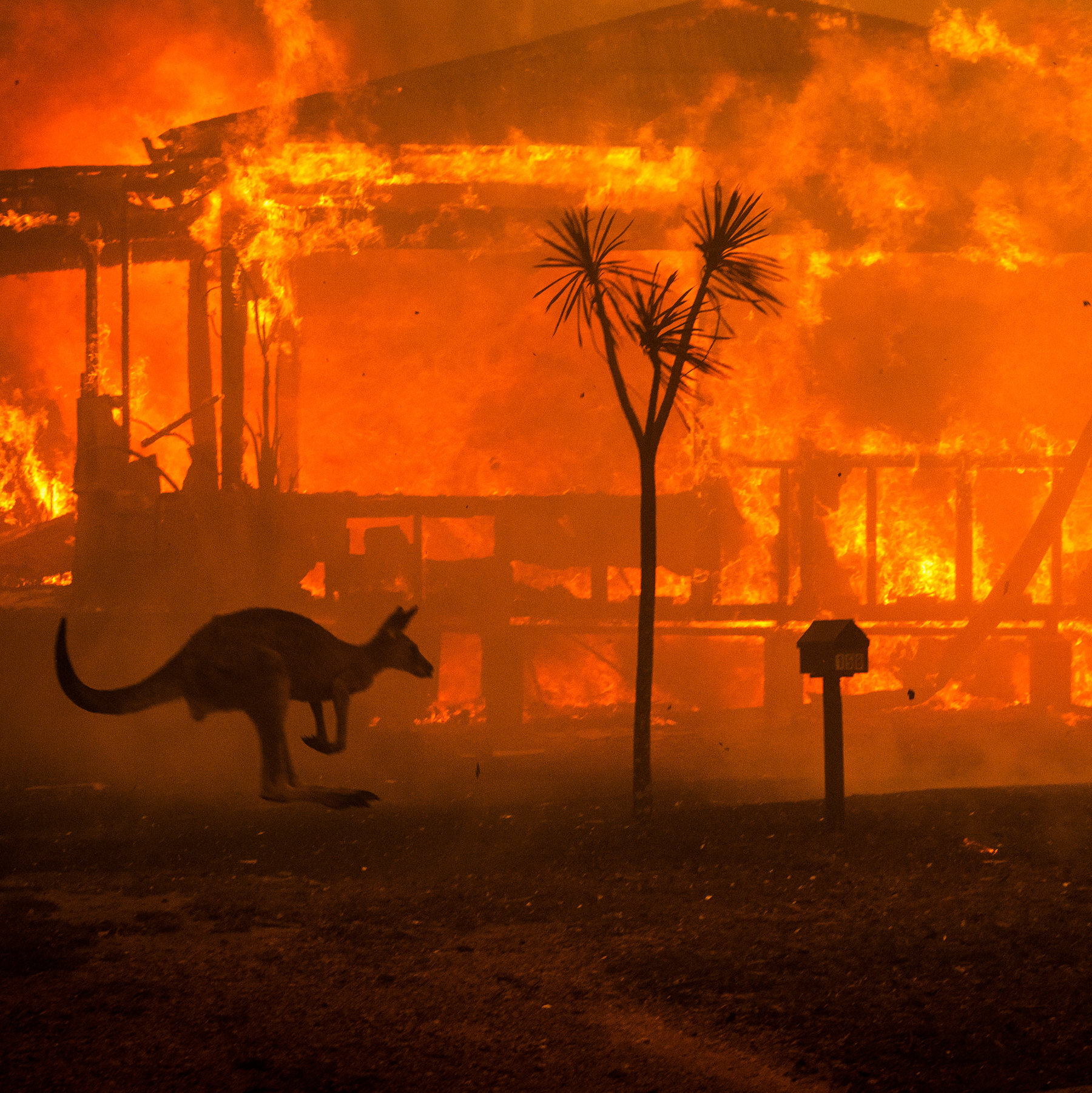
54 - Surviving a bushfire and coping after - with Danielle Graber

In this episode Hunter & Amy interview Danielle Graber, clinical psychologist based in Melbourne who has been working with people impacted by the bushfires. We recorded this episode a month ago but our chief editor (Hunter) has been unwell so we’ve been delayed with the release. Stay tuned for an episode on COVID and a light one for some distraction.

31ozf-fires-kangaroo-mobileMasterAt3x-v2.jpg
DG.jpg

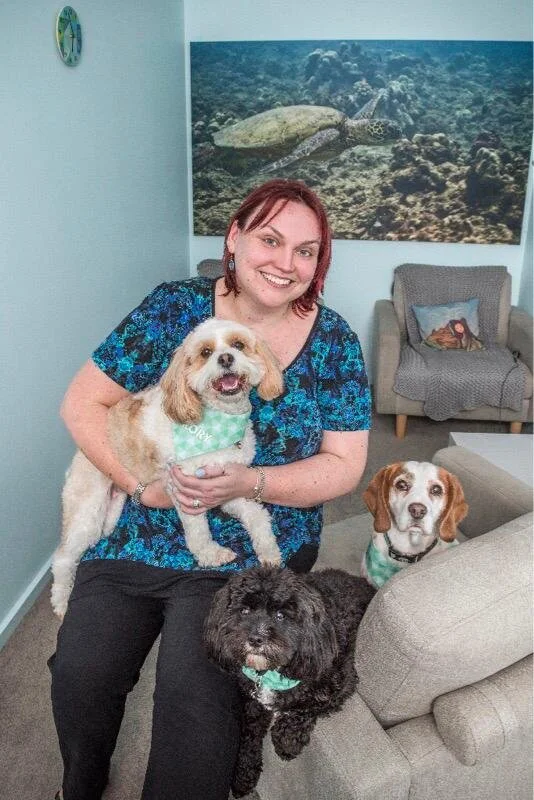
Danielle and her three therapy dogs

The bushfires over the Australian summer were devastating and have left many communities without their homes, businesses and safe spaces. We wanted to chat to a psychologist with experience working with bushfire survivors and helping in the recovery process. Danielle gives a great description of people’s responses to bushfires, talks us through treatment at different stages of response and speaks about the importance of community led recovery. She also gives an easy to understand overview of EMDR and runs us through how she integrates animal assisted therapy into her work.

In the midst of everything that’s happening globally, people are still recovering from the fires and could use some help. If you’re interested, please visit the links below. Danielle’s practice is also offering up to 6 free sessions without a mental health care plan for people impacted by fires on Thursday afternoons until the end of April. Contact 12 points psychology for more information.

Resources:

www.12pointspsychology.com - information about psychological responses

How to access mental health support (including 10 sessions with a psychologist) if impacted by the fires - https://www.servicesaustralia.gov.au/individuals/subjects/how-get-mental-health-support

Neighbours in recovery facebook group - https://www.facebook.com/groups/neighboursinrecovery/ - Get in touch with the group to be involved in coordinated, community based responses

Where to donate:

www.redcross.org.au

www.wildlifevictoria.org.au

www.wires.org.au

www.cfa.vic.gov.au

www.rfs.nsw.gov.au

53 - Sports psychology and helping athletes perform - with Michael Inglis

IMG_4900.jpeg

How do you help a professional athlete perform at their best? How do you help them cope with performance anxiety or failure? What is the role of a psychologist in a football club and how can you work with coaching staff to help the whole team? Hunter chats to Michael Inglis about his work as a sports psychologist. Michael is working with Western United Football Club (that’s soccer for you AFL followers), he has also worked with AFL Players association, Australian Cricketers Association, Rugby Union Players Association, Professional Footballers Association, as well as with tennis players, cyclists - so you know like every sport. This is an episode that is all about improving performance and so will be interesting even if you aren’t crazy into sport.

Michael works at www.themindroom.com.au and they have a sports focused program there: https://themindroom.com.au/what-we-do/sport/

You can follow Michael on twitter : @M_InglisSpoPsyc

If you liked this episode don’t forget to rate/review the show and you can check out more about 2SP at www.twoshrinkspod.com